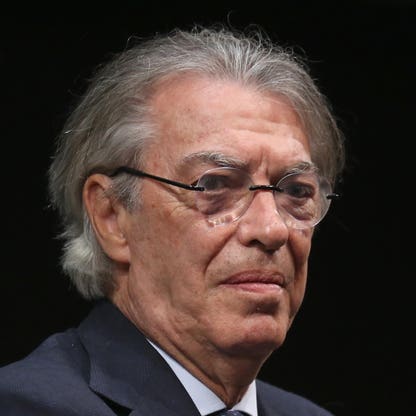
Massimo Moratti's Wealth: A Legacy Forged in Oil, Passionate Football, and Pioneering Green Energy
Massimo Moratti stands as a towering figure in Italy's industrial and sporting landscapes. A name synonymous with vast wealth, entrepreneurial acumen, and an unwavering passion for football, Moratti's financial standing, often subject to public fascination, is a complex tapestry woven from inherited petroleum empires, ambitious new energy ventures, and historic investments in the world of calcio. Understanding Massimo Moratti's net worth requires delving into his multifaceted career and the enduring legacy of the Moratti family.
Born on May 16, 1945, Moratti inherited more than just a name; he received the stewardship of a formidable industrial legacy. His journey from an Italian billionaire petroleum businessman to a champion of renewable energy and a beloved football club owner paints a picture of a man driven by both business foresight and heartfelt commitment. This article explores the core pillars of his fortune, from the oil wells to the wind farms, and the football pitches that captured his heart and a significant portion of his wealth.
The Dynastic Foundation: The Saras Group Petroleum Empire
The bedrock of Massimo Moratti's immense wealth is undoubtedly the Saras Group, an Italian energy giant founded in 1962 by his visionary father, industrialist Angelo Moratti. It's a testament to generational enterprise and strategic investment that the Saras Group has grown into a cornerstone of European energy infrastructure. Upon his father's passing, Massimo Moratti inherited a significant stake and ultimately ascended to the role of CEO, guiding the company through decades of evolving energy markets.
At the heart of the Saras Group's operations is the Sarroch refinery, located on the picturesque island of Sardinia. This isn't just any refinery; it's one of Europe's elite six "supersites," boasting an astonishing capacity of 300,000 barrels per day. To put this into perspective, the Sarroch refinery alone accounts for approximately 15% of Italy's entire refining capacity, highlighting its critical strategic importance not only to the nation but to the broader Mediterranean region. Its integrated and technologically advanced facilities allow it to process a diverse range of crude oils, producing high-quality fuels and other petroleum products crucial for modern economies.
Under Massimo's leadership, and alongside his late billionaire brother Gian Marco (who passed in 2018), Saras took a significant step by going public in 2006. This move not only solidified its market position but also transparently valued a substantial portion of the family's assets. Today, Massimo Moratti remains the largest individual shareholder, controlling a significant 20% stake in the company. His active involvement ensures the continued stewardship of a legacy that has powered Italy for over half a century. The Saras Group's operations extend beyond the refinery to include a liquified fuel gasification plant and, notably, a network of gas stations primarily in Spain, diversifying its revenue streams within the traditional energy sector.
Pioneering the Future: Diversification into New Energy Ventures
While Saras's roots are firmly planted in traditional petroleum, Massimo Moratti has demonstrated remarkable foresight by steering the group towards a future powered by sustainable energy. This strategic pivot was initially driven by a practical need: to secure the Sarroch refinery's independence in terms of energy supply. However, it quickly evolved into a broader commitment to alternative energy sources, marking a crucial expansion of the Moratti family's investment portfolio and contributing significantly to Massimo Moratti's overall wealth.
The Saras Group's foray into renewable energy is primarily channeled through its subsidiaries, Sarlux and Sardeolica. Sarlux, headquartered in Cagliari, is a prime example of innovative resource management, focusing on the production of electricity from waste oil. This circular economy approach not only generates clean energy but also efficiently manages byproducts from refining operations. It represents a smart integration of existing infrastructure with new energy generation methods, showcasing the group's ability to adapt and innovate within its core business.
Even more forward-looking is the significant investment in wind energy through Sardeolica. This subsidiary, indirectly controlled through Eolici Ulassai, is at the forefront of developing wind farms in Sardinia, leveraging the island's excellent natural wind resources. This expansion into wind power isn't merely a minor diversification; it signals a serious commitment to scaling renewable energy production. For a traditional oil magnate, investing heavily in wind energy highlights a pragmatic understanding of global energy trends and the long-term shift towards sustainability. It positions the Moratti empire not just as a guardian of the past, but as a proactive shaper of the future energy landscape.
Practical Insight: This strategic diversification is a masterclass in business resilience. By investing in both traditional and renewable energy, companies like Saras mitigate risks associated with volatile oil markets and position themselves for growth in the burgeoning green economy. It's a blueprint for long-term wealth preservation and growth in an ever-changing global environment.
The €1.5 Billion Passion: Massimo Moratti's Inter Milan Legacy
Beyond the world of barrels and turbines, Massimo Moratti is perhaps best known globally for his deep and often emotionally charged involvement with Football Club Internazionale Milano, commonly known as Inter Milan. From 1995 until 2013, Moratti served as the chairman of the club, a role he inherited with immense pride, following in the footsteps of his father, Angelo Moratti, who oversaw Inter's "Golden Age" from 1955 to 1968. This period was more than just a business venture; it was a profound personal passion and a significant chapter in his financial story.
During his tenure, Moratti became famous for his willingness to invest colossal sums from his personal fortune to elevate Inter Milan to the pinnacle of European football. It is estimated that he spent an astonishing €1.5 billion in the transfer market alone, signing numerous football superstars such as the legendary Ronaldo in 1997. This wasn't merely capital expenditure; it was an investment driven by a dream to restore Inter's glory days. While such an outlay might seem counter-intuitive to increasing one's net worth, it cemented his legacy as one of football's most devoted and generous club owners. This massive investment, while generating immense goodwill and brand value for Inter, represented a substantial expenditure from Massimo Moratti's personal net worth, demonstrating a unique balance between business acumen and passionate patronage.
His dedication eventually bore fruit, culminating in the historic treble win in 2010 – securing the Serie A title, Coppa Italia, and the UEFA Champions League. After stepping down as chairman in 2013, he was rightly inducted into the Italian Football Hall of Fame, acknowledging his immense contributions to the sport. He also served as Inter's honorary chairman and was recognized globally as a United Nations goodwill ambassador, reflecting his broader philanthropic interests. The Inter Milan era, while a drain on his liquid assets, undoubtedly added immeasurable social capital, prestige, and a deeply personal sense of achievement to his overall profile.
Calculating the Moratti Fortune: A Multifaceted Legacy
When considering Massimo Moratti's net worth, it's crucial to understand that it's not a static number but rather a reflection of significant assets, strategic investments, and a family legacy that spans generations. His wealth primarily stems from his substantial ownership in the Saras Group, a publicly traded entity whose market capitalization directly influences the value of his 20% stake. This includes the vast Sarroch refinery, a strategic asset in Europe, as well as the group's diversified operations in electricity generation from waste oil and its growing presence in wind energy through Sarlux and Sardeolica.
The family aspect also plays a vital role. His late brother, Gian Marco, held a similar stake in Saras, which has since passed to his sons, Angelo and Gabriele, highlighting the continued collective economic power of the Moratti family. While the €1.5 billion poured into Inter Milan represented a significant outflow of personal funds, it was an investment in passion and legacy rather than a direct profit-making venture for his personal balance sheet. It cemented his stature, but it's the Saras Group that provides the core financial muscle.
Key Components of Massimo Moratti's Net Worth:
- Saras Group Holdings: His 20% ownership of Italy's largest oil refiner, including the Sarroch supersite and other refining assets.
- New Energy Ventures: Direct and indirect investments in Sarlux (electricity from waste oil) and Sardeolica (wind energy).
- Other Assets: Ownership of a liquified fuel gasification plant, various gas station networks (predominantly in Spain), and potentially other private investments and real estate.
Conclusion
Massimo Moratti's journey encapsulates a unique blend of shrewd business leadership and heartfelt dedication. From inheriting and expanding a petroleum empire with the Saras Group, to pioneering sustainable energy solutions through wind farms and waste-to-energy projects, his financial prowess is undeniable. Yet, his identity is equally forged in the fiery passion he displayed as the chairman of Inter Milan, pouring vast sums into the club he loved. The interplay of these diverse ventures defines Massimo Moratti's net worth, painting a portrait of a man whose legacy is etched into both the industrial landscape of Italy and the hallowed halls of international football. He is a testament to the idea that immense wealth can be built upon a foundation of traditional industry, thoughtfully diversified for the future, and passionately spent on the dreams closest to one's heart.
